
Food safety at a Chengdu school: thinking through the reversals
Where a school canteen buys mouldy ingredients and serves them to pupils, the contractor and its staff may be guilty of producing or selling food that does not meet safety standards, and the school and the contractor may be joint tortfeasors liable for medical costs and other reasonable expenses. The article sets out the criminal, administrative and civil liability involved, and argues that individual precautions such as organic food or private insurance cannot answer risks that cut across class, so public institutions and supervision must.
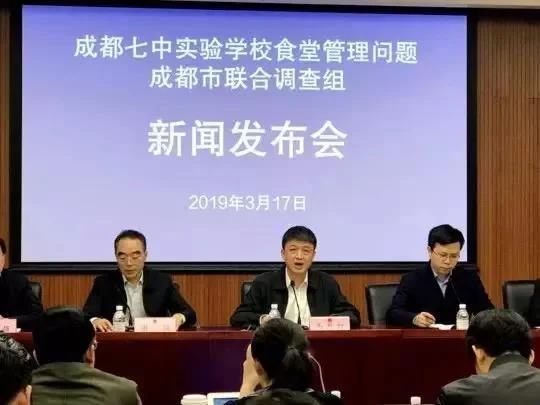
The legal questions behind a food safety incident
As to criminal liability, where a canteen buys mouldy or spoiled ingredients and makes them into food for pupils, or where investigation by the public security authorities shows that the food falls within the circumstances set out in Article 1 of the Interpretation of the Supreme People's Court and the Supreme People's Procuratorate on Several Issues concerning the Application of Law in the Handling of Criminal Cases Endangering Food Safety, those responsible are suspected of the offence of producing or selling food that does not meet food safety standards. Under Article 150 of the Criminal Law of the People's Republic of China a unit may also commit the offence: the unit is fined, and the person directly in charge and the other persons directly responsible are punished.
In this incident the school canteen contractor and its staff may all be suspected of that offence, and other companies or individuals that supplied ingredients to the contractor may be suspected of it too. Where staff of the school conspired with the contractor and allowed food not meeting safety standards to be sold to pupils, they are accomplices; and where a company bribed the school's leaders in order to win the contract to run and maintain the canteen, the contractor is suspected of bribery of a non-state functionary and the school staff of accepting bribes as non-state functionaries.
As to administrative liability, the education authorities have a duty to supervise the day-to-day management of schools and in some places are even responsible for attracting investment in school logistics, while the food and health supervision departments also bear a degree of administrative responsibility for food hygiene and safety. The administrative departments concerned should strengthen supervision and impose administrative penalties on those who break the law.
As to civil liability, the pupils who ate the substandard food are the injured parties. The canteen belongs to the school and was operated under contract by Deyu Logistics, so in this case the school and the contractor, Deyu Logistics, are joint tortfeasors and bear tort liability towards the injured pupils: they should compensate medical expenses, nursing costs, transport costs and other reasonable expenses incurred for treatment and recovery, and where disability results, the cost of disability aids and disability compensation as well. Where a pupil suffers serious mental harm, the injured party may also claim compensation for that harm.
Individual precautions achieve nothing
In traditional society risk seemed to be distributed by class. Television dramas often show the wealthy moving to mansion districts far from the industrial zones while workers live around the polluted manufacturing areas; children in the rich districts can safely drink expensive imported formula while less well-off families choose formula in fear and trembling. In modern society, however, a large part of risk crosses class barriers altogether: air pollution and global warming, for instance. The German sociologist Ulrich Beck observed in his celebrated work Risk Society that poverty is stratified while smog is egalitarian. Take this school food safety incident: whether the fees are four or five thousand yuan or forty or fifty thousand, a pupil may still be served spoiled ingredients in the canteen.
The reasons a school can be so unsafe lie not only in procurement that is neither open nor transparent, but in parents having no part in vetting and choosing the contractor or in supervising it day to day, and further in the head teacher who takes the decisions not sharing a canteen with the pupils. Such institutional arrangements are in fact common, and the absence of third-party supervision and of any check on decision-makers has come to seem normal. Members of society assume that if each person looks after himself society will improve, and so for a long time, faced with crisis and anxiety, each individual has sought an individual solution. Worried about food safety? Buy organic food. Worried about care in old age and illness? Buy commercial insurance. Worried about the standard of schooling? Send the child to the best private school. Yet when a five-star hotel is exposed for cleaning cups with a cloth used on the lavatory, when an expensive kindergarten is exposed for child abuse, and when a private primary school is exposed for cooking mouldy ingredients, everyone should recognise that personal precautions count for nothing against problems that are social in origin. Society is never a simple system, and it is impossible to stay safe by standing apart from public problems: only when the public environment improves does any individual benefit.
On 11 March the Ministry of Education and two other ministries jointly issued the Provisions on the Management of Food Safety, Nutrition and Health in Schools, which set out in detail a system under which those in charge of a school eat with the pupils, supervision by parent representatives and a series of other measures to safeguard food safety. Food safety cannot be patched up only after the sheep are lost, and this is an excellent opportunity to change the habit of individual risk avoidance and to build institutions that solve public problems. If no one acts for everyone, who will act for you?