
How long must spouses live apart before they can divorce?
Chinese law has no concept of automatic divorce: however long spouses live apart, the marriage does not end by itself, and it must be ended either by registration or by a court. Living apart for two years because of incompatible temperaments is a statutory ground on which a court must grant a divorce where mediation fails, but the separation must be a genuine cessation of married life, not separate bedrooms or absence for work or study. The Civil Code adds a second route: a further year apart after a court has refused a divorce.
According to the 2021 Statistical Bulletin on the Development of Civil Affairs issued by the Ministry of Civil Affairs, 2.839 million couples went through divorce formalities in the previous year, a divorce rate of 2.0 per thousand.
Among that large number, some cases involve no statutory ground such as bigamy or domestic violence; the spouses simply do not get on, hold different views, are dissatisfied with married life and wish to end the marriage.
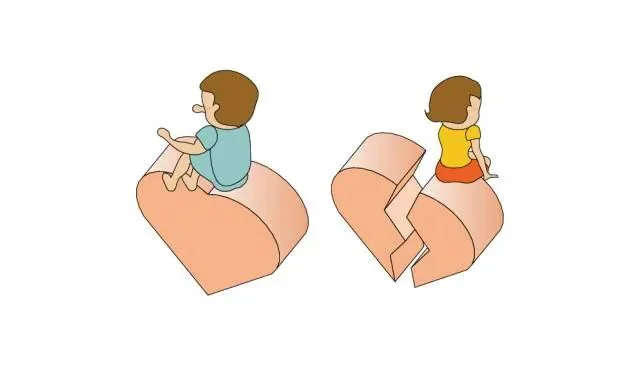
Some of them live apart, believing that a long enough separation will divorce them automatically.
So how long must they live apart before an automatic divorce takes effect?
The answer is that no period of separation produces the legal effect of divorce.
Chinese law has no provision for automatic divorce. A marriage is ended either by divorce by agreement or by divorce through litigation. A long separation does not divorce the parties automatically.
The misconception arises from misreading the provision in the Marriage and Family Part on the statutory ground of living apart for two years because of incompatible temperaments.
Civil Code
Article 1079 Where one spouse wishes to divorce, the relevant organisation may mediate or the spouse may bring divorce proceedings directly in a people's court.
A people's court hearing a divorce case shall mediate; where affection between the parties has genuinely broken down and mediation fails, the divorce shall be granted.
The divorce shall be granted if mediation fails and any of the following circumstances exists:
(1) bigamy or cohabitation with another person;
(2) domestic violence, or abuse or abandonment of family members;
(3) gambling, drug addiction or other bad habits persisted in despite repeated warnings;
(4) living apart for two years because of incompatible temperaments;
(5) other circumstances that break down the affection between the parties.
Where one spouse is declared missing and the other brings divorce proceedings, the divorce shall be granted.
Where, after a people's court has refused a divorce, the parties have lived apart for a further year and one of them again brings divorce proceedings, the divorce shall be granted.
What does it mean to live apart for two years because of incompatible temperaments, so that mediation fails and the divorce is granted?
In practice three key points capture it.
First, living apart;
Second, living apart because of incompatible temperaments;
Third, for two full years.
The legal meaning of living apart is often misunderstood.
Misunderstanding one: sleeping in separate rooms is living apart;
Misunderstanding two: any separate residence counts as living apart in law, whatever the reason for it.
In law, living apart means that the spouses do not live together and do not perform the rights and obligations of husband and wife towards each other, so that the marriage exists in name only.
Only where the parties do not live together and do not perform their rights and obligations as spouses is there separation in the legal sense.
Secondly, only separation because of incompatible temperaments falls within the meaning of the ground for divorce.
In practice spouses often live in two places because of work, study, medical treatment or caring for elderly parents, and none of these is separation in the sense of the marriage law.
Compared with the former Marriage Law, the Civil Code adds a provision on divorce by separation.
"Where, after a people's court has refused a divorce, the parties have lived apart for a further year and one of them again brings divorce proceedings, the divorce shall be granted."
This provision means that where the parties' first divorce suit was dismissed and they have continued to live apart for a full year, a court should grant a divorce if one of them sues again.
In such a case the parties perform none of the obligations of marriage towards each other, and the long separation leaves no prospect of reconciliation, which shows that the relationship has not improved since the earlier proceedings and that the spouse who sues again is determined to end it.
In summary, separation leads to divorce in only two situations: one, living apart for two years because of incompatible temperaments; two, living apart for a full year after a judgment refusing divorce, where one party sues again. Only these two forms of separation are statutory grounds for divorce.