Two days across the Seven Peaks
In October, when the weather was clear, a group from Minton Law Firm set out to walk the Seven Peaks traverse, a roughly 50-kilometre ridge route between the two Tianmu mountains in Lin'an, Zhejiang, that passes over seven summits. The firm arranged the trip as a two-day lightweight hike, and by the end the group had covered 47.65 kilometres with 4,720 metres of accumulated ascent, reaching all seven tops including Longwang Mountain at 1,582.4 metres. The route is known among hikers as the second hardest in eastern China.
Golden October, a high sky and a long road. The day was fresh and clear, blue sky and white cloud, just right for climbing high and looking far. In such weather the Minton lawyers set off light, beginning the challenge of the Seven Peaks traverse.
Among hikers who like a challenge, the Seven Peaks traverse needs no introduction. The route begins and ends in Lin'an, Zhejiang, running along the ridge from Xianren Peak on West Tianmu Mountain to Daxian Peak on East Tianmu, or the other way round, about 50 kilometres in all, passing mainly over seven summits, which is where the name comes from. The highest point on the route is only about 1,500 metres, modest beside peaks of more than 3,000 metres such as Taibai Mountain, but the unbroken succession of ridges spread over those 50 kilometres has earned it the name, half admiring and half warning, of the second most punishing route in eastern China.
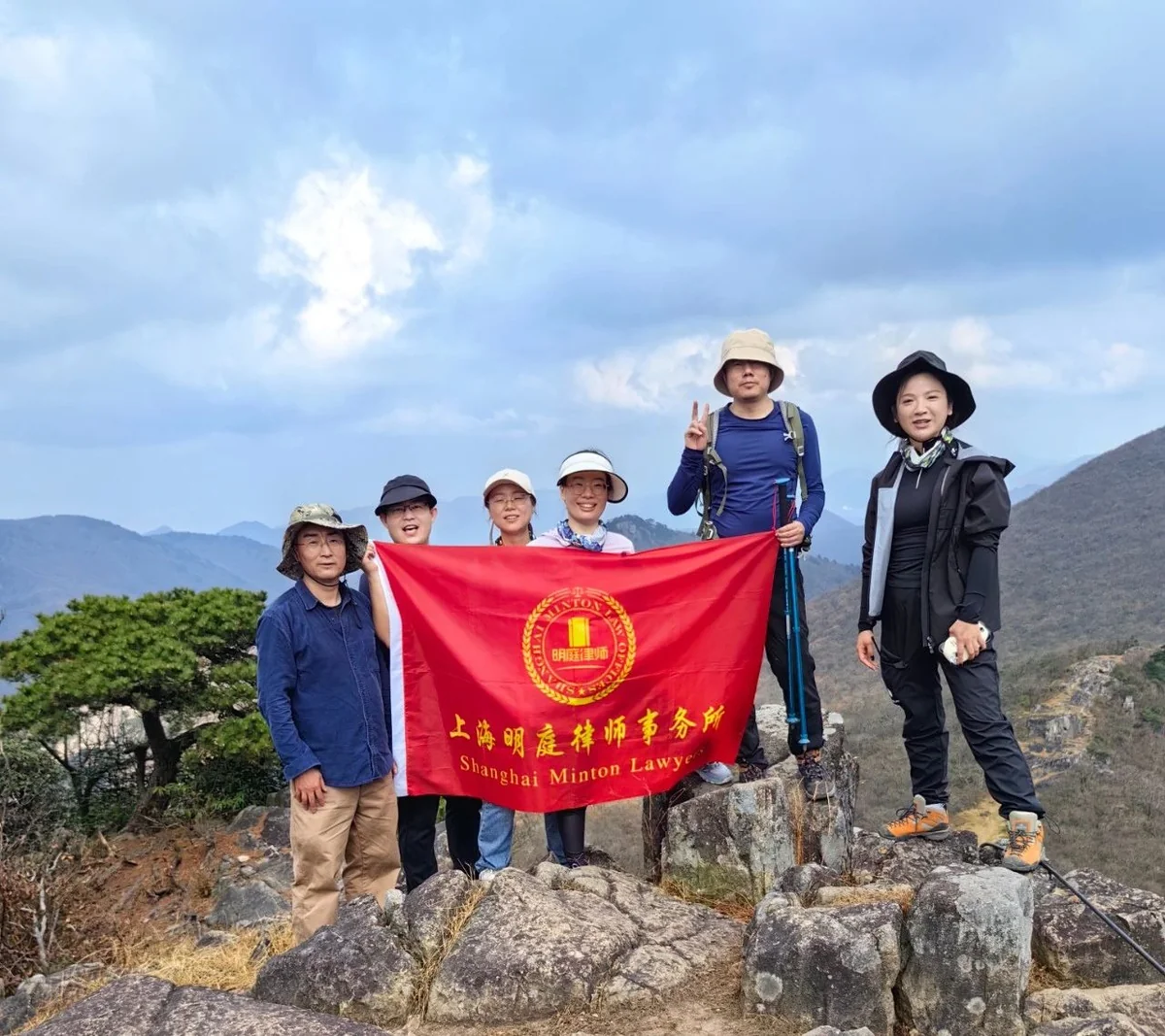
The firm made the Seven Peaks the goal of a through-hike, which tested the stamina and the will of those taking part as much as the organising ability of those arranging it. The organiser studied the route, weighed the fitness of the Minton lawyers and consulted the notes of experienced hikers, and settled on a two-day, one-night lightweight walk. Walking poles in hand, supplies packed and warm rainproof jackets on, the group set off.
At first light everyone was already on the move, faces full of expectation and confidence for the journey ahead. Off to the Seven Peaks.
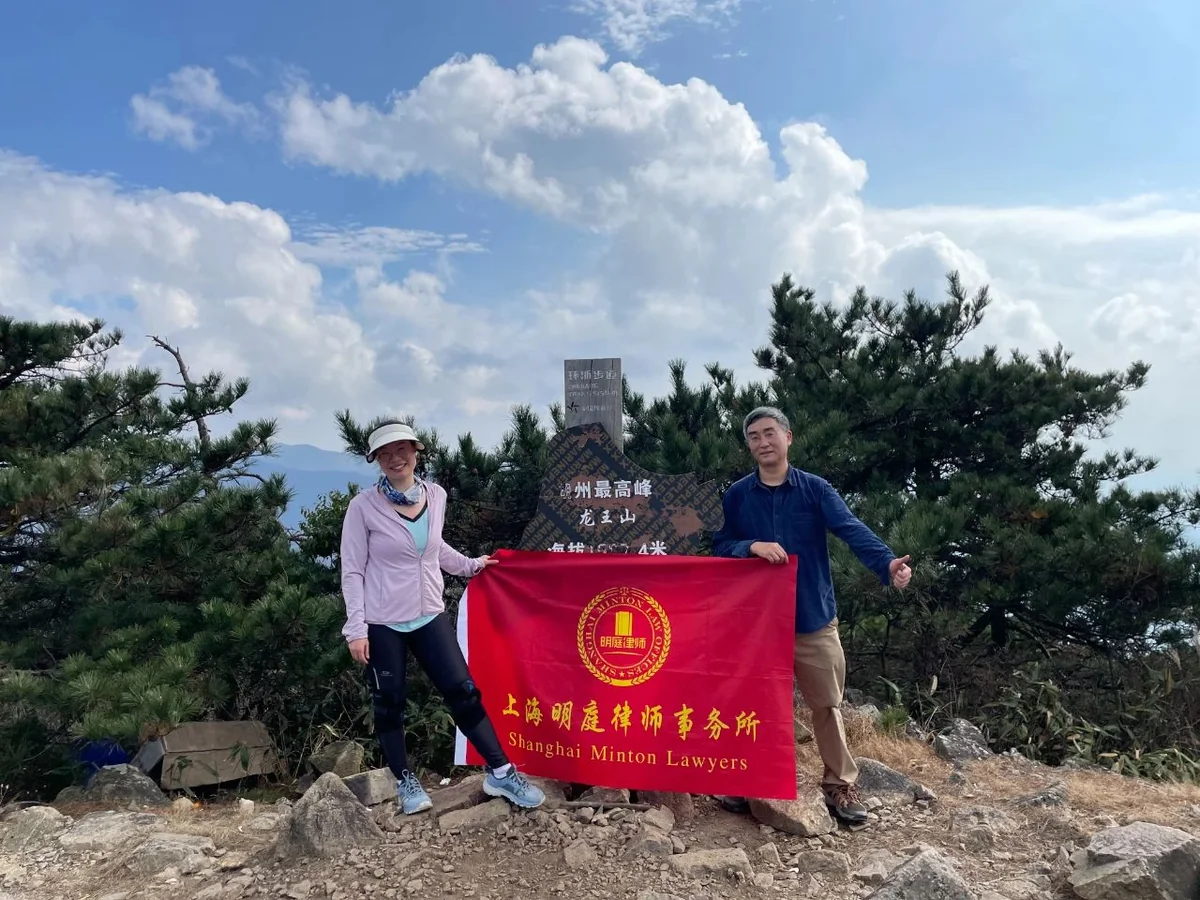
Sheshan, the highest natural feature above ground in Shanghai, rises to just 100.8 metres. The highest peak on the Seven Peaks route, Longwang Mountain, stands at 1,582.4 metres. Climbing Longwang alone leaves a walker short of breath, let alone as one stage of a 50-kilometre journey over seven peaks. Looking back afterwards, the Minton lawyers had covered 47.65 kilometres with 4,720 metres of accumulated ascent and reached all seven summits including Longwang, the equivalent of going up and down Sheshan more than twenty times.
However tiring the road, a proper meal still matters. Lunch was good; the picnic atmosphere made it better. Look closely at what they are eating with: twigs for chopsticks, which is the whole charm of it.
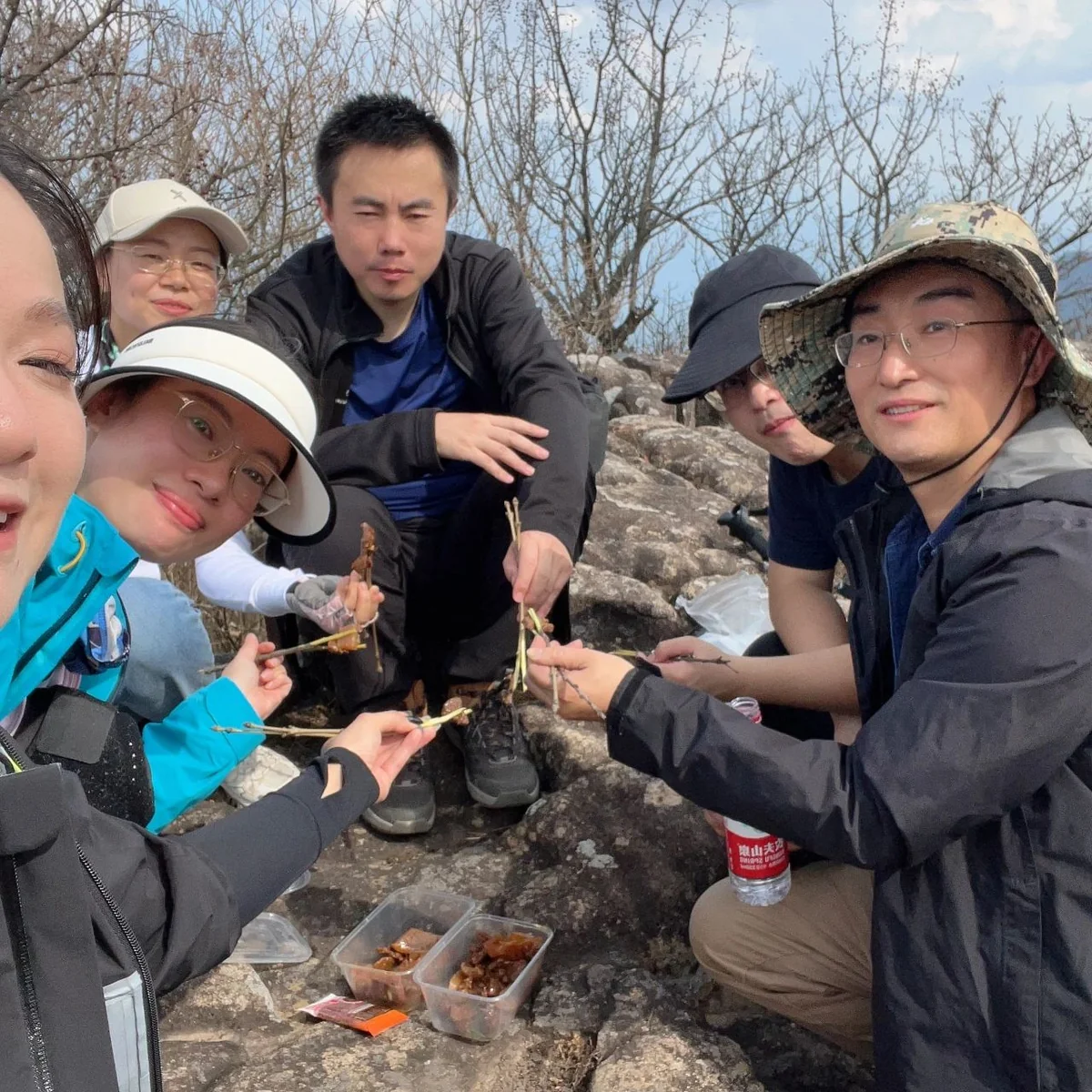
The walking was harder than expected. In the city a signal is everywhere, but on a mountain path even a mobile phone loses its connection from time to time. At work or in life, though, the lawyers of Minton do not shrink from a difficulty. Even short of breath and too tired to look at a phone, they kept an eye on one another and pressed on. At last the first day's stage was over.
After the first day every muscle ached, to the point where even stairs were hard to descend. But when the sun came up on the second day, everyone was on the route on time. The second half of the Seven Peaks traverse lay ahead.
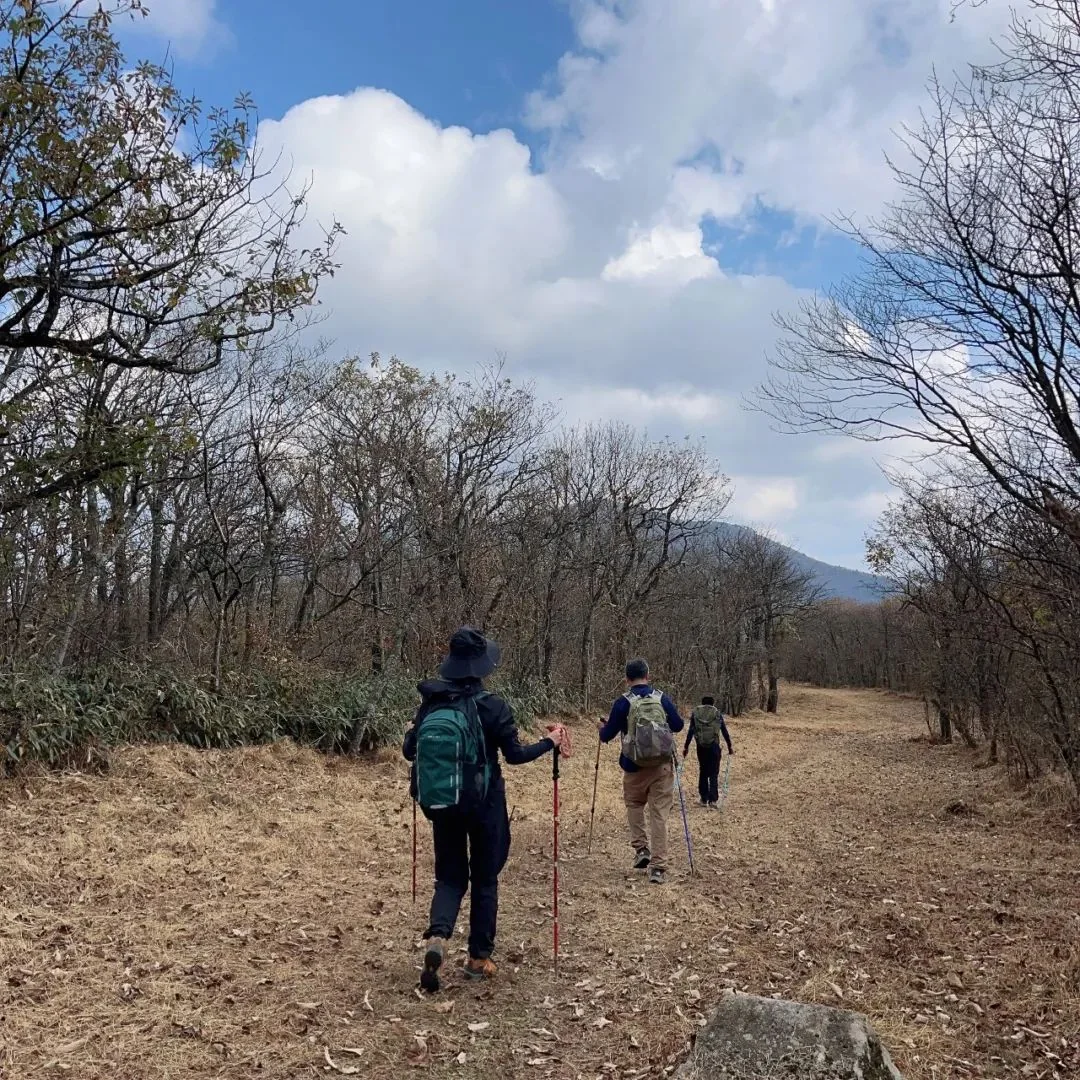
Hiking, in the plainest sense of the word, means walking. But the ground is usually the edge of a city, a village or open country, unlike the city walks that are now in fashion, and unlike the paved and waymarked paths of a scenic area. The surface is a road, or a mountain track. On the way to work the feet meet polished marble, soft rubber and flat tiles; on this walk none of that existed, and in their place were rising tracks, broken ground, earth, stone, weeds and fallen leaves.
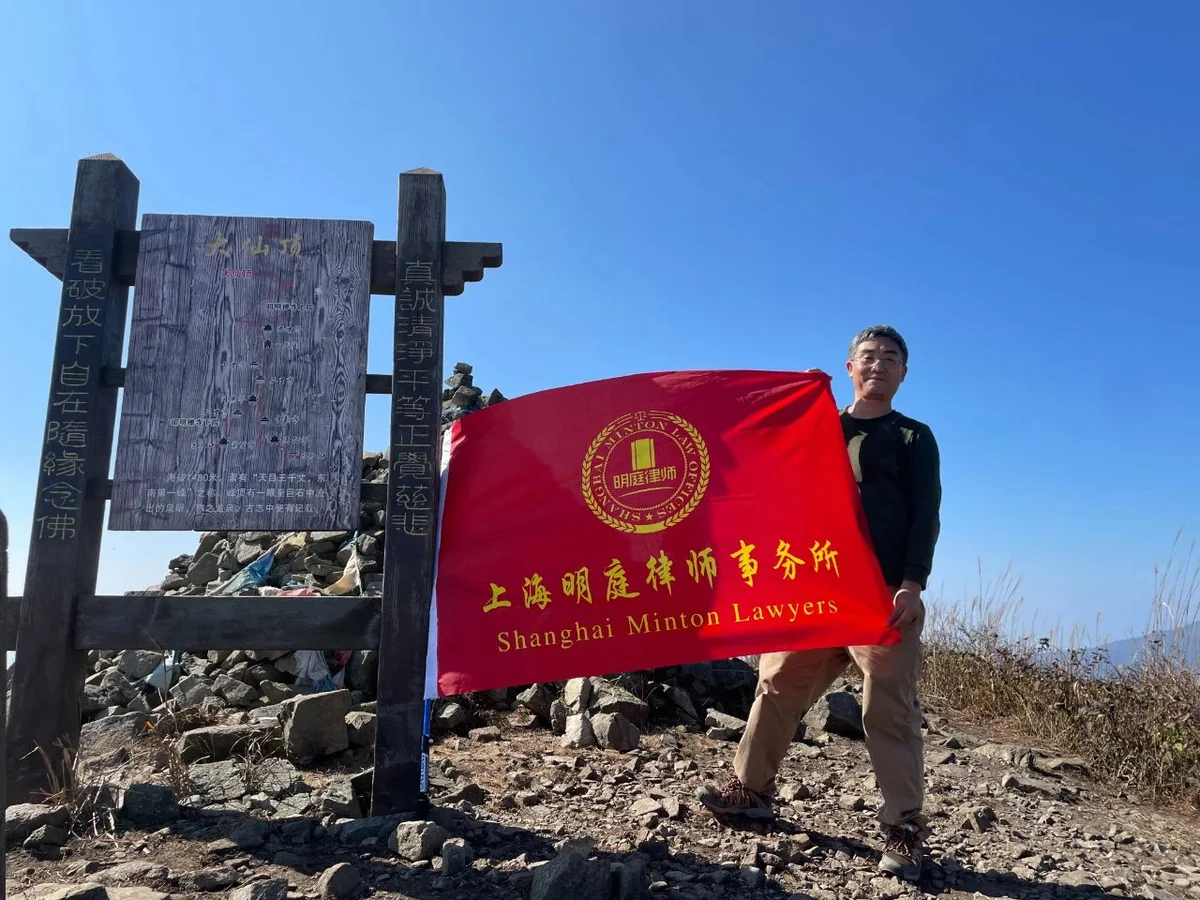
The two long days drew towards their end. The last stop, Daxian Peak, reached.
In work as in life, only steady cultivation brings a harvest, and only persistence in the climb opens the whole of the view. Through this walk the members trained their bodies, tempered their will and breathed fresh air. Beyond the pressure of work, a well-timed hike not only keeps people fit but gives them a platform on which to talk to one another, holding each other up, helping each other along and moving forward together. The ground underfoot is certain, the aim in view is bright, and the future will only get better.