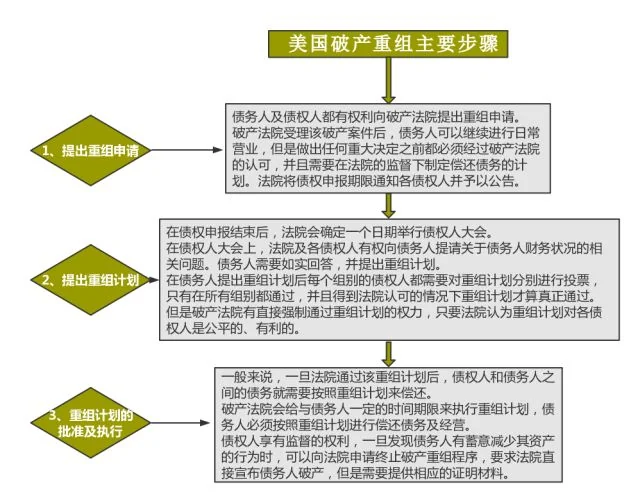
The procedure for applying for reorganisation, and the points of review
A bankruptcy court confirmed a reorganisation plan over the objection of U.S. Bank by treating the buyer of an insider's claim as a non-statutory outsider, so that the plan could be crammed down. The Ninth Circuit affirmed, and the question it had to answer was narrower: whether the mixed question of law and fact, namely whether the buyer was an insider, should be reviewed afresh or only for clear error. The article sets out the statutory definition of insider, the two-part test and the standard of review.
1. The facts
Appellant (plaintiff below): U.S. Bank (the bank)
Appellee (defendant below): THE VILLAGE AT LAKERIDGE, LLC (Lakeridge)
Court of appeal: the Ninth Circuit
Date: 5 March 2018
Result: the judgment below is affirmed and the appeal dismissed
A reorganisation plan blocked again and again
The status of a creditor becomes the issue
Lakeridge, a company wholly owned by MBP, owed the appellant bank more than ten million US dollars and owed MBP 2.76 million dollars. Lakeridge therefore applied for reorganisation so as to satisfy its creditors, but the bank opposed the application.
Lakeridge then turned to a so-called "cramdown" plan, that is, a plan that harms the interests of an involuntary creditor. One precondition for judicial approval of such a plan is that the other impaired creditors have already accepted it. In this case, however, the other creditor that accepted the cramdown plan, MBP, was an "insider" of the debtor Lakeridge. Because MBP, as an insider, could not give the acceptance the plan required, Lakeridge's reorganisation was blocked.
TIP: on the "cramdown" plan
Chapter 11 of the Bankruptcy Code provides that a company with debts may reorganise its business under a plan, approved by the court, for distributing its assets among creditors. The plan treats creditors' claims against the debtor differently and fixes the amount each claim will receive. Normally a bankruptcy court may approve the plan only where every affected creditor accepts it.
In some circumstances, however, the court may confirm a "cramdown" plan proposed by the debtor, that is, impose a plan over the dissent of a creditor. One precondition for judicial confirmation is that another impaired creditor, usually not an "insider" of the debtor, has already accepted the plan.
MBP therefore tried to assign its claim against Lakeridge to a non-insider who could accept the plan. Kathleen Bartlett, a member of MBP's board, and officers of Lakeridge then sold MBP's claim against Lakeridge, for 5,000 dollars, to a retired surgeon, Robert Rabkin. Rabkin then proposed a reorganisation of Lakeridge, which once again the bank opposed.
The bank argued that, because Rabkin had a special relationship with Bartlett and the transaction was concluded within a certain relationship, he qualified as a non-statutory "insider".
The bankruptcy court rejected the bank's contention, and the Ninth Circuit affirmed.
2. Analysis of the case
The case raises the court's definition of a non-statutory "insider", and how an appellate court should review such a ruling procedurally, that is, whether it should hear the matter afresh and in full or review the bankruptcy court's decision for "clear error".
(1) The statutory definition of "insider"
The Bankruptcy Code imposes various restrictions on any party that becomes a debtor, and its definitional provisions list a group of persons with a special relationship to the debtor, usually called "insiders". In practice courts have also identified insiders who are not on that list, usually called "non-statutory insiders", and whether a person is one turns on whether his dealings with the debtor, or with another insider, were at arm's length.
Under the definitional provisions, the insiders of a corporate debtor include its directors, officers and persons in control. Because the provision uses the word "includes", courts have long treated the list as incomplete, and have devised tests to identify other non-statutory insiders. Those decisions are not entirely uniform, but they turn more or less on whether the person's business dealings with the debtor were frequent.
The case arose chiefly because the insiders listed in the statute obstructed Lakeridge's reorganisation. Lakeridge was a company established and wholly owned by MBP Equity Partners and carrying enormous debts. In 2011 it filed for bankruptcy, and the plan it submitted placed its two creditors in different classes. The bank opposed the plan, and the cramdown could not go forward.
On the conditions as they stood, MBP met the definition of insider exactly: it had established Lakeridge as sole owner and was therefore, on the statutory definition, the person in control of the debtor. At the same time, an insider could not give the acceptance the cramdown required. Lakeridge thus faced liquidation rather than reorganisation.
Liquidation and reorganisation differ greatly, as the table below summarises.
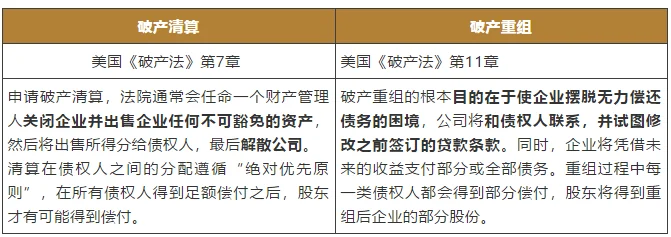
For Lakeridge to obtain reorganisation, MBP had to transfer its claim against Lakeridge to a non-insider, so that the plan could be carried out; that was the purpose of MBP's subsequent assignment of its claim to Rabkin.
Did Rabkin then satisfy the conditions for a non-statutory insider? The answer affected whether Lakeridge could carry out its plan.
(2) Non-statutory insiders examined
Rabkin, as the new holder of MBP's old loan, accepted the reorganisation. If he was not an insider of Lakeridge, his acceptance satisfied one of the preconditions for the cramdown to pass, with the immediate consequence that the reorganisation would not be blocked by the bank's opposition.
Whether Rabkin was a non-statutory insider thus became the issue in dispute.
The bank argued that Rabkin qualified as a non-statutory insider because of his special relationship with Bartlett and because he had bought MBP's loan. At an evidentiary hearing both Rabkin and Bartlett testified that their relationship was indeed special.
The bankruptcy court rejected the bank's contention that Rabkin was a non-statutory insider. It found that his purchase of MBP's claim was a "speculative investment", since he had made a full inquiry, that Rabkin and Bartlett lived in separate households and managed their finances independently, and that Rabkin was not a non-statutory insider; his acceptance therefore supported the cramdown.
The Ninth Circuit affirmed by a divided vote. Under the court's test a creditor qualifies as a non-statutory insider if two conditions are met:
(1) his relationship with the debtor is close to the classes of insider listed in the Bankruptcy Code;
(2) the transaction in question was negotiated at arm's length.
The outcome shows that the appellate court agreed with the bankruptcy court that Rabkin was not a non-statutory insider.
(3) Reviewing the "mixed question" of fact and law
Determining whether a creditor is a non-statutory insider raises a "mixed question" of fact and law for review, namely whether the Ninth Circuit was entitled to review for "clear error" rather than hear the matter afresh.
On review, a bankruptcy judge determining whether a creditor is a non-statutory insider must decide three kinds of question: first a question of law, second a question of fact, and finally the two combined.
First, on the law, the bankruptcy court must decide whether a person is a non-statutory insider, which, again, is to be treated as an insider even though not listed in the Code. The choice of the standard for identifying a non-statutory insider does, however, belong to the reviewing court: an appellate judge will not usually defer to the lower court's conclusion on a question of law.
As noted, the Ninth Circuit endorsed a two-part test: whether the person's relationship with the debtor resembles the situations of the insiders listed in the statute, and whether the transaction in question was concluded within a particular relationship.
On the second limb of the test the circuit court held that the bankruptcy court had denied Rabkin insider status: "We do not resolve whether the Ninth Circuit's test is correct; indeed, we decline the bank's request to review that question. We simply adopt the conclusion the test produces in order to decide the case."
Secondly, besides applying the legal standard, the bankruptcy court assessing insider status must decide what may be called the "basic" questions of fact, namely who did what, when and where, how and why. The body of historical fact found naturally depends on the legal test applied, so that under the Ninth Circuit's test the findings may concern the nature of a particular relationship or of an earlier transaction.
As a rule, the resulting findings of fact are what the appellant calls reviewable "clear error", and they weigh heavily on the bankruptcy court's judgment. The Ninth Circuit could therefore review the bankruptcy court's findings about Rabkin's relationship with Bartlett.
Finally, as to the two combined, the "mixed question" of law and fact is the heart of the case. A mixed question requires a judgment whether the facts meet the legal standard, in other words whether the law applicable to the facts found has been respected. As described above, the bankruptcy court found certain basic facts about Rabkin: he satisfied the legal test for non-statutory insider status, and the transaction was concluded at arm's length. The bankruptcy court then determined, on those facts, whether he met the description.
The court compared law with fact and determined that the facts found did not show the creditor to be a non-statutory insider. How should that decisive conclusion be reviewed?
The bank argued that the bankruptcy court's resolution of the mixed question must be reviewed afresh, because applying a general legal standard to a set of basic facts requires further elaboration of legal principle, a task principally for the appellate court.
Lakeridge, by contrast, argued that the ultimate question of application is bound up with the facts specific to the case and therefore falls naturally within the bankruptcy court's province.
Both sides face the same question: what is the nature of the mixed question here, and which court is better placed to decide it? Mixed questions are not all alike. As the bank suggested, some require the court to elaborate the law, in particular by extending a legal standard, and where that is so the appellate court will usually review the judgment.
As Lakeridge replied, other mixed questions plunge the court into the facts of a particular case, forcing it to weigh evidence, make findings of credibility or otherwise resolve matters that resist generalisation.
In short, a mixed question is characterised by whether it is mainly a matter of law or mainly a matter of fact. In this case the court had to decide whether the basic facts it had found sufficed to show that Rabkin, given his connections and his motives, was a non-statutory insider; using the Ninth Circuit's test, that became: do the facts found show that Rabkin and MBP dealt at arm's length? The mixed question thus became whether, on all the basic facts, Rabkin's purchase of MBP's claim showed the two to be strangers to each other. The court weighed the question as a whole against the historical background of the case: whether, when these two particular people entered this particular transaction, they behaved like strangers or not.
At the hearing the bankruptcy court had received the evidence and heard all the witnesses, and had the closest and deepest understanding of the facts. Appellate review, even fresh review, of an arm's-length dealing would shed little light on legal principle or guide other courts resolving such disputes, so the question was not one the appellate court should take over. The appellate court applied the correct standard in reviewing the bankruptcy court's ruling that Rabkin did not qualify as an insider, a conclusion resting mainly with the bankruptcy court and reviewable only for clear error, and it affirmed.
In sum, one focus of the case is the review of the so-called "mixed question" of law and fact, that is, whether the bankruptcy court's findings fit the legal definition of non-statutory insider status. The Ninth Circuit was right to review for clear error, rather than afresh, the bankruptcy court's decision that Rabkin was not a non-statutory insider, and the steps in a reorganisation appear in the annex to this article.